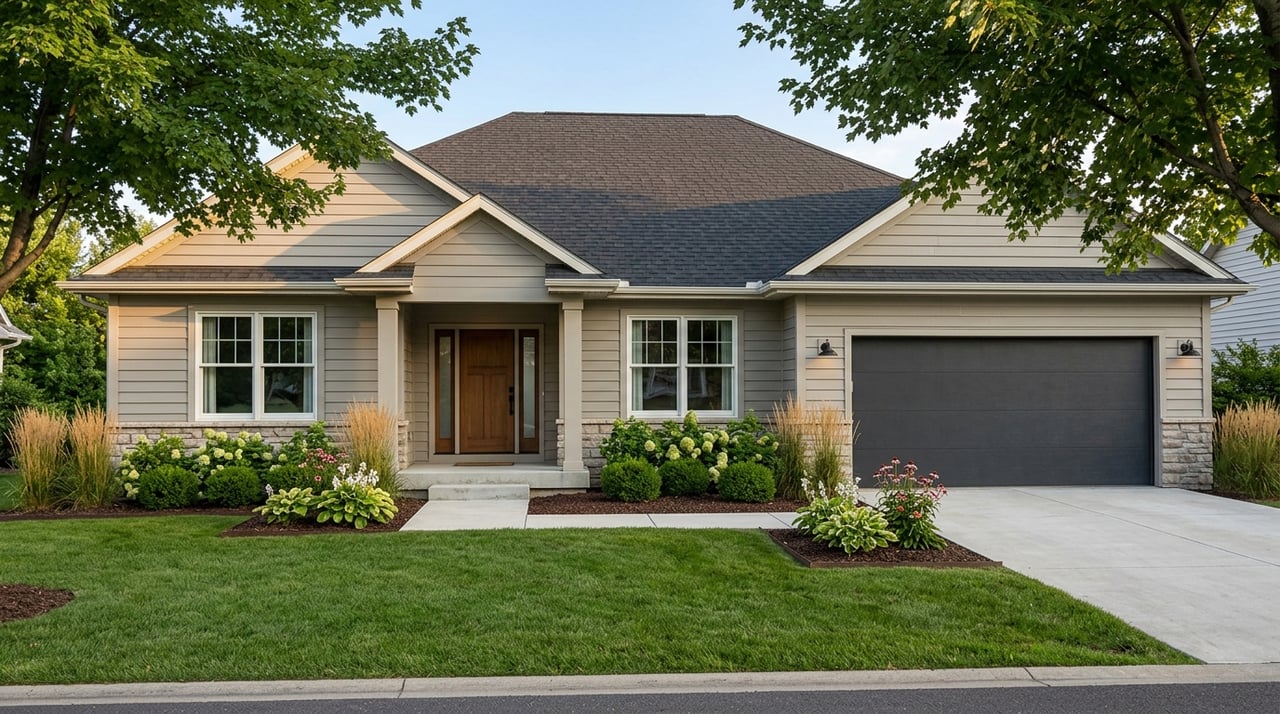
Feeling cramped in a house that no longer fits, or stuck with more space and upkeep than you want? In Bloomington, right-sizing is not just about going smaller. It is about finding a home that better matches how you live now, what you want to maintain, and what makes sense for your budget. This guide will help you think through your options, evaluate your current home, and plan your next move with more confidence. Let’s dive in.
What right-sizing means in Bloomington
Right-sizing means choosing a home that fits your current season of life. For some people, that means less square footage and less maintenance. For others, it means moving into a home with more room, a different layout, or features that work better day to day.
That idea fits Bloomington well. The city has more than 90,000 residents, a median age of 41.8, and 19.5% of residents are age 65 or older. Bloomington has also said it needs to be prepared for residents who want to age in place as lifestyles change.
Bloomington’s housing mix gives you real choices. About 51% of the housing stock is single-unit detached, while nearly 33% is multi-unit housing with three or more units. That means right-sizing here can include detached homes, townhomes, condos, co-ops, and other lower-maintenance options.
Start with how your home functions
Before you decide to move, look closely at how your current home works for you. Think beyond square footage and ask whether the space supports your daily routine. A home can be the right size on paper and still feel wrong in practice.
Here are a few practical questions to ask yourself:
- Do you use all of your bedrooms regularly?
- Does the floor plan make daily life easy or frustrating?
- Are stairs becoming a challenge?
- Is yard work or exterior upkeep taking more time than you want?
- Are monthly costs still comfortable?
- Are repairs and updates starting to pile up?
In Bloomington, this step matters even more because much of the single-family housing stock is older. The city assessor says 82% of single-family homes were built in the 1950s, 1960s, and 1970s. Older homes can still be solid and appealing, but systems, maintenance, and update needs often play a big role in the right-sizing decision.
Consider staying and improving
Moving is not always the best answer. Sometimes the smarter move is to adapt the home you already own. If your location still works well and your main issues are layout, repairs, or accessibility, improving your current home may be worth exploring.
Bloomington’s HRA offers a Home Improvement Loan program for owner-occupied households that want to maintain, repair, or improve a home instead of moving. For some homeowners, that can make staying put more practical than taking on the costs and logistics of a sale and purchase.
This option can be especially helpful if your home only needs a few changes to work better. That might include addressing maintenance items, improving function, or making the property easier to live in over time. Right-sizing is about fit, not just moving.
Downsizing options in Bloomington
If your goal is less upkeep, fewer stairs, or a simpler monthly routine, Bloomington offers several paths. The city’s 2026 assessment counted 3,996 condos, 2,266 townhomes, 850 co-ops, 218 zero-lot-line homes, and 176 duplex or triplex parcels. That gives long-time owners more than one way to reduce maintenance without leaving the city.
Townhomes and zero-lot-line homes often appeal to homeowners who still want some privacy and a more house-like feel. Condos and co-ops can also reduce maintenance demands, though the city assessor noted condo values softened in 2026 in part because of rising insurance premiums and HOA fees. If you are comparing attached-home options, make sure you look at the full monthly cost, not just the purchase price.
What to compare when downsizing
When you look at smaller or lower-maintenance homes, compare the details that affect daily life most:
- Monthly payment and total housing cost
- HOA dues and what they cover
- Insurance costs
- Main-level living or stair requirements
- Storage space
- Parking and garage setup
- Outdoor maintenance responsibilities
A smaller home only feels like the right fit if it makes life easier, not more complicated.
Upsizing options in Bloomington
Right-sizing can also mean moving up. If your current home feels too tight, lacks enough bedrooms, or no longer fits your work, hobbies, or household needs, Bloomington still offers a clear move-up path.
Detached homes remain the core of Bloomington’s move-up market. The city assessor counted 21,304 single-family residential parcels, and homes valued under $350,000 continued to see strong demand. The assessor also noted above-average increases for homes in the $500,000 to $800,000 range in the 2026 assessment, which suggests steady interest across both entry and higher-end single-family segments.
If you are upsizing, focus on the features that will matter long term. More square footage helps, but layout, lot size, storage, and flexibility often matter just as much. Buying your next home is a chance to solve the problems your current one cannot.
Understand Bloomington price patterns
Knowing local price patterns can help you set realistic expectations. In April 2026, Bloomington’s citywide median sales price was $361,800. Homes spent a median of 34 days on market and received 101.5% of original list price on average.
There was also a price split within the city. East Bloomington had a median sales price of $345,500 and 24 days on market, while West Bloomington had a median sales price of $375,000 and 39 days on market. That does not mean one side is better than the other, but it does show that pricing and pace can vary within Bloomington.
For your right-sizing plan, local conditions matter because they affect both sides of the move. Your current home may attract strong interest if it is priced well, but your replacement options may still feel limited if inventory is tight.
Coordinate your sale and purchase carefully
One of the biggest mistakes homeowners make is treating the sale and purchase as separate events. In Bloomington, they need to be coordinated. In April 2026, the city had 131 homes for sale and 1.6 months of supply, which points to limited inventory for buyers.
At the same time, homes were still moving in about a month on average. That means a well-prepared listing can sell, but finding the next home may take planning. If you wait too long to start the search, you may feel rushed on the buy side.
A practical way to think about timing is to decide which path is most realistic for you:
- Sell first if you want clearer budget numbers before buying.
- Buy first if finding the right replacement home is your top concern.
- Use temporary housing if you want more flexibility between transactions.
The best path depends on your budget, comfort level, and how specific your next-home needs are.
Prepare for Bloomington’s Time of Sale rules
If you plan to sell, Bloomington has an important local step you need to build into your timeline. The city requires a Time of Sale inspection for single- and two-family dwellings, condominiums, townhouses, and mobile homes offered for sale. The inspection costs $250, must be completed and filed before listing, and remains valid for one year.
The report covers visible structural elements, heating, electrical and plumbing systems, other construction components, and accessible unoccupied areas. It also provides buyers with energy-efficiency information. Because this is required before listing, it is smart to plan for it early instead of treating it as a last-minute item.
Why this matters for right-sizing
The Time of Sale requirement can affect your schedule and your prep list. If your goal is to list quickly after finding your next home, this step can slow things down if you have not planned ahead. It is one more reason right-sizing works best as a strategy, not a rushed decision.
Build a right-sizing plan that fits you
A good right-sizing decision starts with clarity. You do not need to have every answer on day one, but you do need a framework for evaluating your options. Start with your lifestyle, then connect that to budget, timing, and home type.
A simple planning checklist can help:
- Define what is not working in your current home.
- Decide whether improving the home could solve those issues.
- Identify your ideal next-home features.
- Review likely monthly costs for each housing option.
- Plan for Bloomington’s Time of Sale inspection if selling.
- Think through whether you will sell first, buy first, or bridge the gap.
This process can help you move from vague frustration to a practical plan. That is often the difference between a stressful move and a confident one.
Why right-sizing is about balance
In Bloomington, right-sizing is rarely just about more or less space. It is often about balancing upkeep, accessibility, budget, and lifestyle in a market with older single-family homes, meaningful attached-home options, and limited inventory.
That is why the best move is not always the biggest home or the smallest one. It is the home that supports how you want to live now and in the years ahead. When you take the time to compare your options carefully, you are more likely to make a move that feels right long after closing.
If you are thinking about right-sizing in Bloomington and want practical guidance on how to line up the sale of your current home with your next purchase, Eric Frank can help you build a plan that fits your goals.
FAQs
What does right-sizing mean for Bloomington homeowners?
- Right-sizing in Bloomington means choosing a home that better fits your current lifestyle, budget, maintenance preferences, and space needs, whether that means moving smaller, moving larger, or staying put and improving your current home.
What are common downsizing options in Bloomington?
- Common Bloomington downsizing options include condos, townhomes, co-ops, zero-lot-line homes, and some duplex or triplex-style properties, all of which may offer lower-maintenance living than a detached single-family home.
What should Bloomington homeowners check before deciding to move?
- Bloomington homeowners should review how well their current home functions, including bedroom count, layout, accessibility, maintenance demands, lot care, monthly costs, and the condition of older systems or features.
Is a Time of Sale inspection required in Bloomington?
- Yes. Bloomington requires a Time of Sale inspection for single- and two-family dwellings, condominiums, townhouses, and mobile homes offered for sale, and it must be completed and filed before listing.
How competitive is the Bloomington housing market for right-sizing?
- Bloomington’s April 2026 market data showed 131 homes for sale, 1.6 months of supply, a median of 34 days on market, and homes selling at 101.5% of original list price on average, so planning both the sale and purchase sides is important.
Should you sell first or buy first in Bloomington?
- The right approach depends on your budget, comfort with timing, and how hard your replacement home may be to find, but Bloomington’s limited inventory and required Time of Sale inspection make advance planning especially important.
